
One keyword moved
Check spelling, intent, close variants, and direct competitors. Avoid rewriting the whole listing for one isolated term.
An ASO rank tracker records where an app appears for selected keywords by store and country, then preserves that movement over time. Rank Analyzer Pro connects those observations with current checks and competitor context so a ranking change becomes a reviewable signal instead of an isolated number.
Start Free with limited manual keyword checks. Paid plans add daily automated tracking, competitor monitoring, alerts, and reports.

A useful rank record contains more than a position. It ties together the selected app, keyword, store, country, observed position, timestamp, historical movement, and relevant competitor context. Remove any one of those fields and the result becomes easier to misread. A position in one country is not a universal global rank, and a current check without history cannot tell you whether the app is improving, stable, volatile, or declining.
For a practical explanation of one-time checks versus ongoing monitoring, see app rank checker vs app rank tracker.
These methods answer different questions. The right choice depends on whether you need one observation, a historical pattern, competitive context, or a repeatable decision process.
| Method | What it answers | Best use | Main limitation |
|---|---|---|---|
| One-time rank checker | Where is this app observed for this keyword now? | Confirming a specific position before a decision | No history and limited context |
| Historical rank tracker | How has the observed position changed? | Finding trends, baselines, and volatility | Movement still needs interpretation |
| Competitor monitoring | Did direct rivals move on the same terms? | Separating isolated losses from market pressure | Poor competitor selection creates noise |
| Full ASO review workflow | What changed, why might it matter, and what should happen next? | Weekly product and metadata decisions | Requires disciplined scope and notes |
The example below shows why the shape of movement matters more than one position. The values are illustrative and do not represent customer results.
| Signal | Day 1 | Day 7 | Day 14 | Interpretation |
|---|---|---|---|---|
| Keyword A, US | #24 | #17 | #11 | Consistent improvement worth monitoring |
| Keyword B, US | #8 | #9 | #8 | Stable within a narrow range |
| Keyword C, US | #19 | #28 | #36 | Broad decline requiring context |
| Direct competitor, Keyword C | #22 | #16 | #10 | Competitor pressure is a plausible factor |
| Keyword C, UK | #13 | #14 | #12 | US decline is not global |
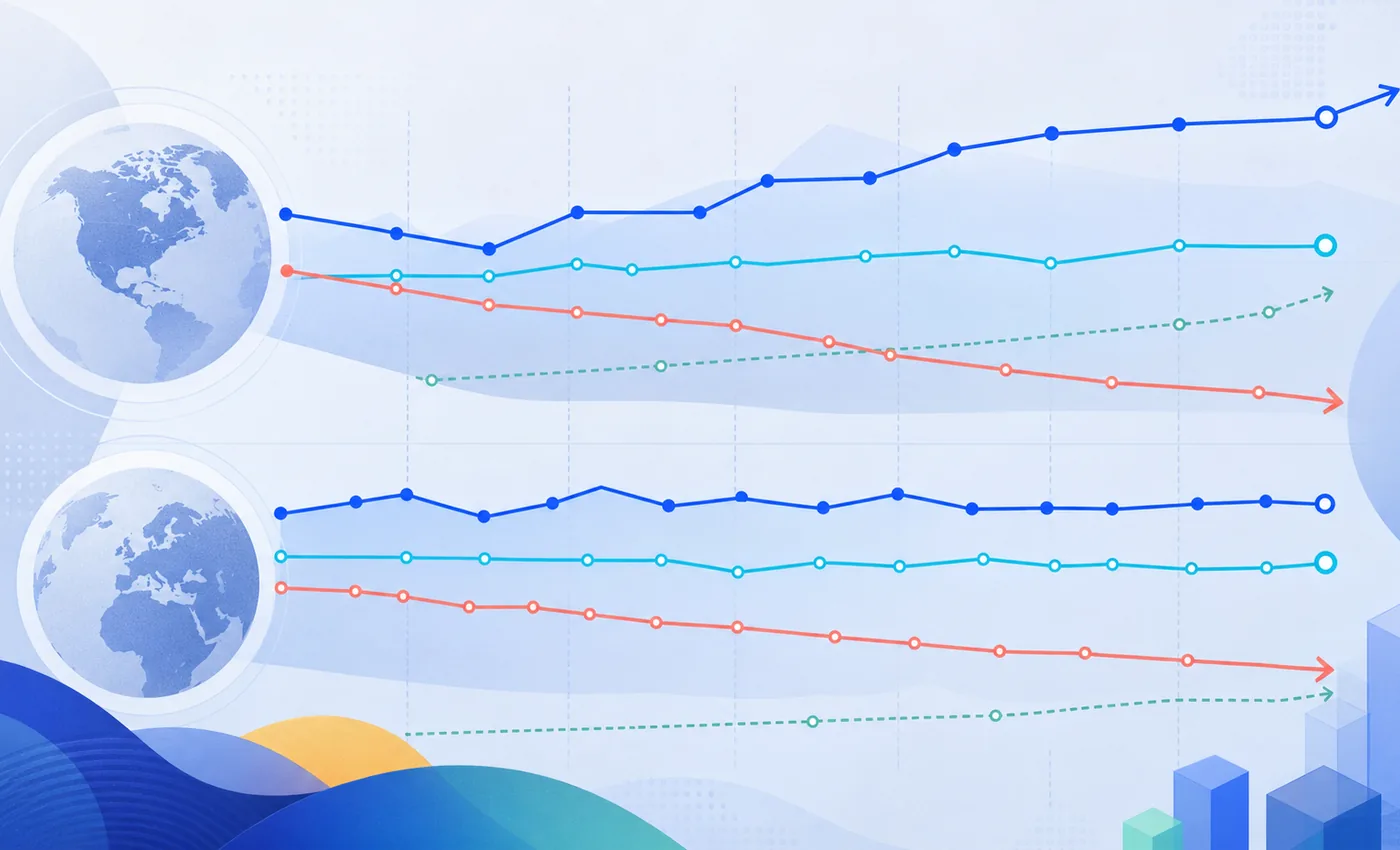
A good review narrows uncertainty before anyone edits a listing. Use the same sequence each week so urgent problems are handled quickly and ordinary volatility does not trigger random changes.
A movement pattern suggests where to investigate; it does not prove a proprietary store algorithm changed.
Check spelling, intent, close variants, and direct competitors. Avoid rewriting the whole listing for one isolated term.
Review listing changes, availability, release quality, policy status, and whether the shift appears across intent groups.
Inspect localization, country availability, local vocabulary, and regional competitors before treating it as global.
Compare the update timeline with the first observed change, but keep correlation separate from proof.
Use a longer window and related terms to distinguish normal volatility from a sustained direction.
Confirm the setup and repeat the check. It means the app was not observed within the tracked depth, not that visibility is impossible.
For a cause-by-cause diagnostic process, use the guide to understand why app keyword rankings drop.
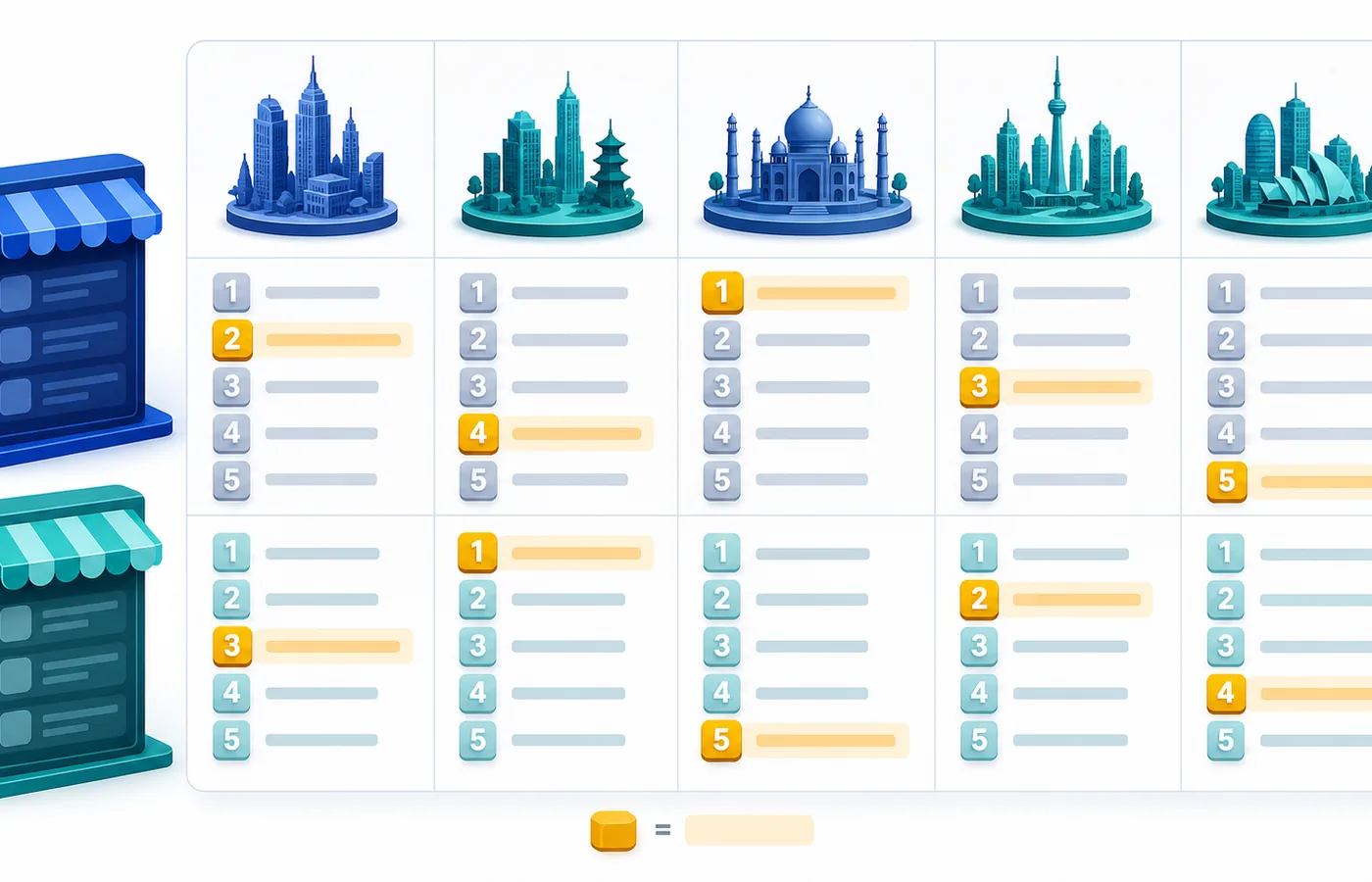
App Store and Google Play results should not be mixed into one rank, and the United States and United Kingdom should not be treated as one market.
| Dimension | Why it differs | Review rule |
|---|---|---|
| Store | Listings, result sets, and platform context differ | Track each store separately |
| Country | Vocabulary, competition, and availability vary | Preserve the selected market |
| Localization | Metadata and intent can differ by language | Compare like-for-like listings |
| Competitor set | Direct rivals can change by market | Use country-relevant competitors |
Use the dedicated Google Play keyword tracker and App Store keyword tracker guides when store-specific metadata and market questions become the focus.
The same data supports different jobs depending on portfolio size and decision cadence.
Keep a focused list of commercially important keywords, confirm country context, and know when a change deserves attention without maintaining a spreadsheet.
Separate multiple apps, stores, and countries while preserving a consistent weekly review process across releases.
Maintain evidence for client conversations, compare direct rivals, and keep observation separate from hypotheses and recommendations.
Prioritize meaningful movement across a portfolio and direct attention to the terms, markets, and apps that changed most.
Use the six movement patterns above to frame the review, then check the evidence below before changing the listing.
| Question | Why it matters | Useful evidence |
|---|---|---|
| Is the movement sustained? | Repeated observations are more meaningful than a single position. | History for the same app, keyword, store, country, and depth |
| Is it broad or isolated? | A group-wide decline suggests a different investigation from one weak term. | Related category, feature, audience, and long-tail keywords |
| Is it market-specific? | A local movement may point to localization, availability, or regional competition. | Separate country histories and live listing checks |
| Did a known change overlap? | Timing helps form a hypothesis but does not prove causation. | Release, metadata, country, category, and availability notes |
| Did direct rivals move? | Competitor gains can change the result set even when your listing did not change. | Comparable rivals in the same store and country |
A complete review also checks the status of the underlying observations. Pending means the first valid check has not completed, failed means collection did not produce usable evidence, and not observed means a valid check did not find the app inside the tracked depth. Keeping these states separate prevents missing data from being mistaken for a ranking decline.
Use the resulting decision to shape the next review. A confirmed listing issue may require correction, a competitor shift may justify closer monitoring, and a volatile term may simply remain under observation. The value of tracking comes from making these responses consistent across stores and countries.
Direct answers to common ASO rank tracking questions.
An ASO rank tracker records where a selected app appears for selected keywords in a specific app store and country, then preserves those observations so movement can be reviewed over time.
Daily checks provide a useful operational history for important keywords, while weekly reviews help teams separate meaningful movement from ordinary day-to-day volatility.
Countries can differ in localization, search vocabulary, competing apps, listing availability, current ranking foothold, and user response. A rank should always be interpreted with its country context.
Yes. Rank Analyzer Pro keeps both stores in one workspace while preserving store, app, keyword, and country context for every tracked observation.
Not ranked means the selected app was not observed for that keyword inside the tracked search depth at that time. It does not prove the app has no visibility anywhere.
Act quickly on confirmed technical, availability, or policy problems. For ordinary ranking movement, confirm the market and scope, compare related terms and competitors, and avoid reacting to one isolated check.
Start with the app, keywords, stores, and countries that matter most, then review movement with enough context to make a controlled decision.
Start Free