
Title and subtitle
Record wording changes and which tracked intents they affect. Compare related terms and markets instead of judging the edit through one keyword.
Track where an iOS app is observed for selected keywords in specific App Store markets, preserve movement over time, and review metadata or competitor changes without treating one country as a global result.
Start Free with limited manual keyword checks. Paid plans add daily automated tracking, competitor monitoring, alerts, and reports.

An App Store ranking is an observed position for a selected app, storefront or country, keyword, timestamp, and tracked search depth. The same term can produce a different observation in the United States, United Kingdom, Canada, Australia, or India. Historical comparison shows whether that market-specific position is improving, stable, volatile, declining, newly observed, or no longer observed inside the tracked depth.
The table shows why a single global rank is misleading. All values are illustrative and are not customer data.
| Market | Example position | Possible context to review | Next check |
|---|---|---|---|
| United States | #18 | Dense direct-competitor set | Compare rivals and related terms |
| United Kingdom | #11 | Stronger current foothold | Confirm stability across the week |
| Canada | #24 | Different competitor mix | Review direct local alternatives |
| Australia | #16 | Similar language, different result set | Keep market history separate |
| India | Not observed | Localization, availability, or weaker foothold | Verify listing, term, and tracked depth |
Metadata belongs in the evidence log, but no field should be presented as a guaranteed ranking lever or an exact proprietary weight.
Record wording changes and which tracked intents they affect. Compare related terms and markets instead of judging the edit through one keyword.
Preserve the before-and-after record and review the intended market. Do not infer a precise hidden weighting from one movement.
Confirm that the expected localized metadata is live and that tracked terms reflect natural vocabulary for the selected market.
Place category, version, and release changes on the timeline. Timing provides context but does not prove the cause.
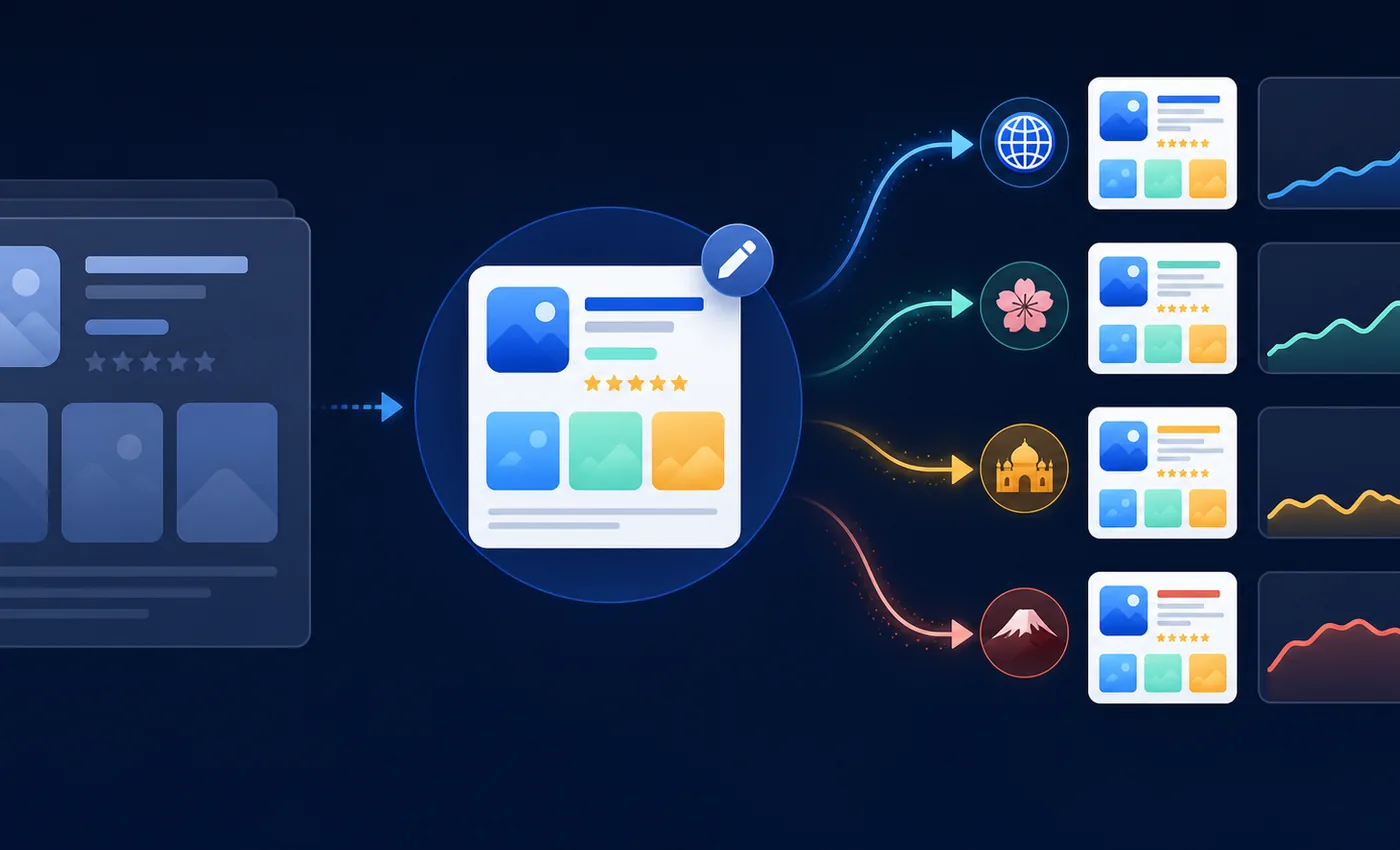
Country-specific movement is often the most useful clue because it narrows the investigation.
The live title, subtitle, keyword field, and supporting listing language can differ across localizations.
The apps competing for the same search intent may be different or stronger in one storefront.
A missing or restricted market listing can turn a ranking question into an availability issue.
Users can describe the same job differently across markets, even when they share a language.
An app starting at #12 and an app starting at #88 have very different exposure to ordinary movement.
One storefront may fluctuate briefly while another stays stable, making repeated observations essential.

Confirm whether the intended app is observed for a specific keyword and storefront now. A manual check is useful before adding a term to monitoring or when saved data needs verification.
Preserve comparable observations to find sustained improvement, decline, stability, volatility, and newly observed visibility.
Compare direct alternatives in the same market. Category giants and unrelated apps can make the comparison impressive but less useful.
A controlled review begins before the update goes live.
If a decline is already visible, use the guide to diagnose why app keyword rankings drop.
An App Store result belongs to a storefront, localization, app, phrase, time, and tracked depth. Keeping that context intact prevents a common mistake: interpreting one market's movement as a universal verdict on the app.
| Evidence pattern | What to compare | Reasonable next step |
|---|---|---|
| Several related terms fall in one market | Localized metadata, availability, release timing, direct local rivals | Verify the storefront and investigate a market-specific explanation |
| The same group falls across markets | Shared product or metadata changes and wider competitor movement | Review common factors before editing individual localizations |
| One term improves after an update | Neighboring terms, other storefronts, and repeated observations | Preserve the result as a hypothesis and continue monitoring |
| A term becomes not observed | Tracked depth, spelling, app availability, collection status | Verify the check before treating it as lost visibility |
| Competitor gains while your app is stable | Shared keyword history and current market result | Monitor pressure; do not manufacture a decline that is not present |
Localization is more than translating a keyword. The phrasing must describe the product naturally for users in the selected market, and the live App Store listing must match the intended localization. Compare the title, subtitle, keyword-field plan, and supporting listing language, but avoid claims about exact proprietary weights. The evidence can show that a change and movement overlap; it cannot prove the internal mechanism.
Before a metadata update, save the terms and storefronts that matter, confirm current positions, and write down the hypothesis. A useful hypothesis names the audience or intent being clarified and the group of keywords expected to respond. After the update, confirm that the intended metadata is live, then compare the same terms and markets over enough observations to judge direction. Adding unrelated changes during the review weakens the result.
Act when a sustained pattern affects important terms and a correctable issue is confirmed. Investigate when several related signals move but the cause remains uncertain. Monitor when one reading or one phrase changes without wider support. Retire a keyword when it no longer matches the product or market vocabulary. This cadence keeps the tracker tied to decisions instead of turning it into a permanent archive of every keyword idea.
Start with the markets where the app is available and the team can make localization or positioning decisions. Reuse a keyword across storefronts only when the phrase is natural and the comparison has a purpose. A shared-language term can still face a different competitor set or carry a different local meaning, so preserve each country as its own observation.
For every important storefront, combine a few category benchmarks with feature, audience, problem, and long-tail terms. Add defensive keywords where the app already has useful visibility and a small number of competitor gaps worth testing. This creates a balanced market view without pretending that every localization needs the same keyword set.
Keep collection status separate from rank status. A pending first check means no valid observation exists yet. A failed check means the attempt did not produce usable data. Not observed means a valid search did not find the selected app inside the tracked depth. Treating these states correctly prevents technical gaps from being reported as performance declines.
Document the storefront, localization, observation date, and tracked depth when sharing results. These details make later comparisons reproducible and prevent a current check from being presented as a universal or permanent App Store position.
It is an observed position for one selected iOS app, keyword, storefront or country, timestamp, and tracked search depth.
Markets can differ in localization, vocabulary, competitor sets, availability, existing visibility, and temporary result movement.
Yes. A baseline for important keywords and markets gives the post-update review something comparable to evaluate.
No. Metadata changes are relevant review context, but they do not guarantee a specific ranking outcome or prove a proprietary ranking weight.
A checker provides one current observation. A tracker preserves comparable observations so improvement, stability, volatility, and decline can be reviewed over time.
It means the selected app was not found within the tracked depth for that keyword and market at that time. It does not prove the app has no search visibility anywhere.
Track important iOS terms, review metadata changes with history, and make one evidence-backed decision at a time.
Start Free